


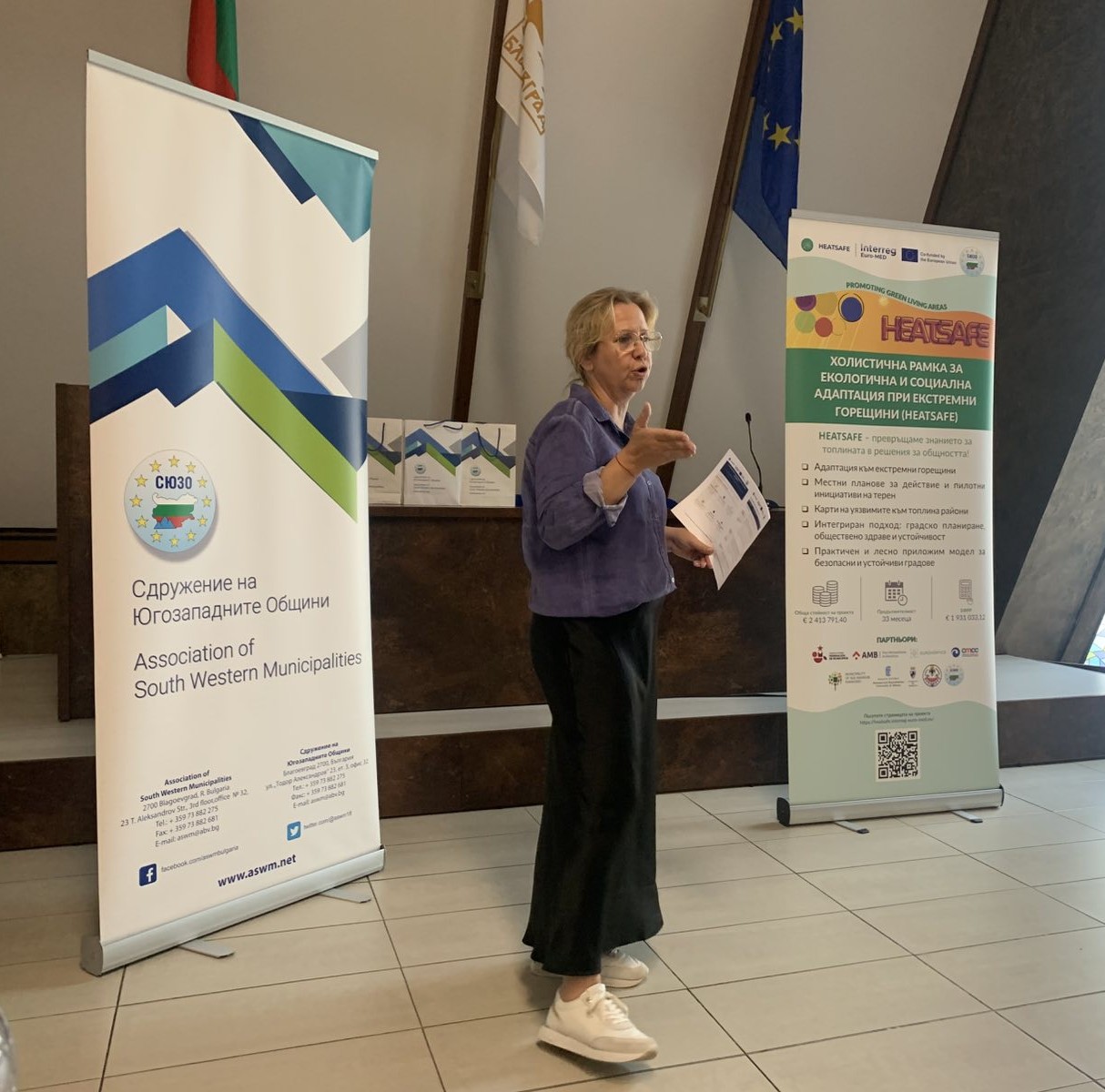
On 30 June 2026, the Association of South-Western Municipalities (ASWM) held the third meeting of the Stakeholder Network under the HEATSAFE – Holistic Framework for Environmental and Social Adaptation to Extreme Heat project, co-funded by the Interreg Euro-MED Programme 2021–2027. The meeting took place at the Municipality of Blagoevgrad. It brought together representatives of public authorities and key stakeholders involved in developing local measures to address the impacts of extreme heat.
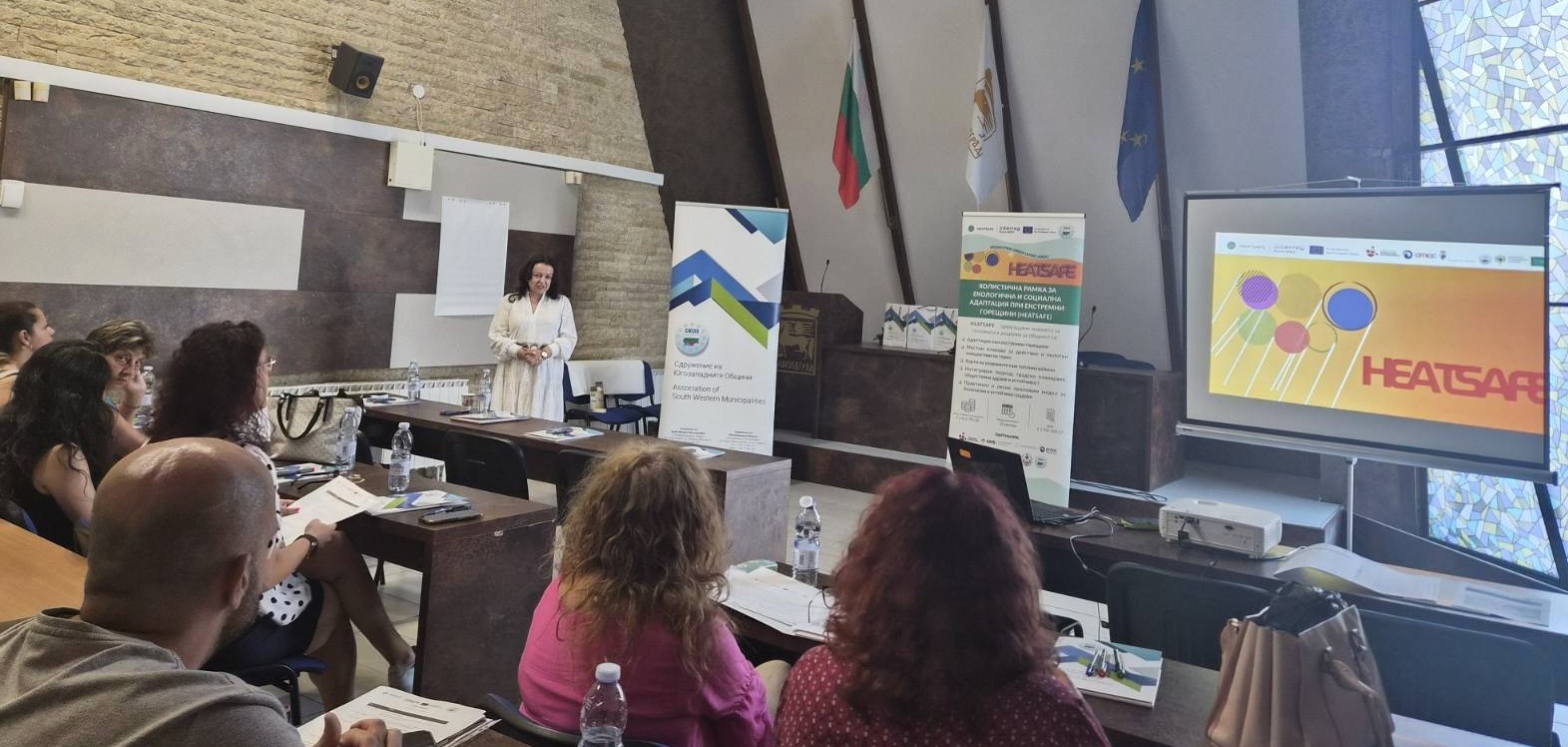
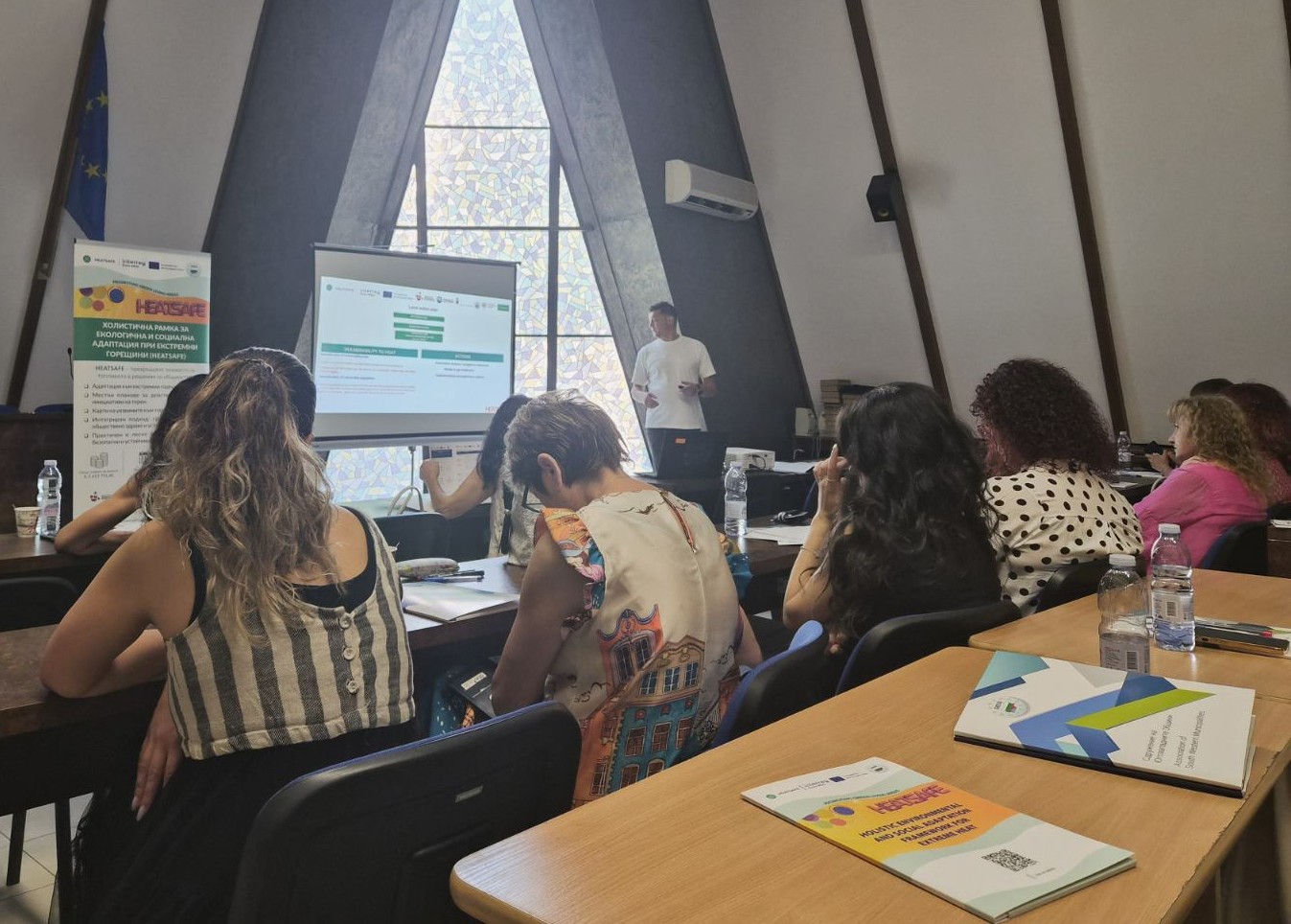
The meeting focused on the draft Local Action Plan, including response protocols for heatwaves, the identification of urban climate shelters, and the communication campaign planned for the summer of 2026. Participants underlined that the proposed protocols are designed to complement, rather than replace, the existing emergency and disaster response mechanisms.
Participants agreed that the HEATSAFE approach is both timely and necessary, as increasingly frequent and prolonged heatwaves require dedicated local planning and stronger institutional coordination. The Local Action Plan aims to improve preparedness, enhance cooperation among responsible authorities, and strengthen the protection of vulnerable population groups during extreme heat events.
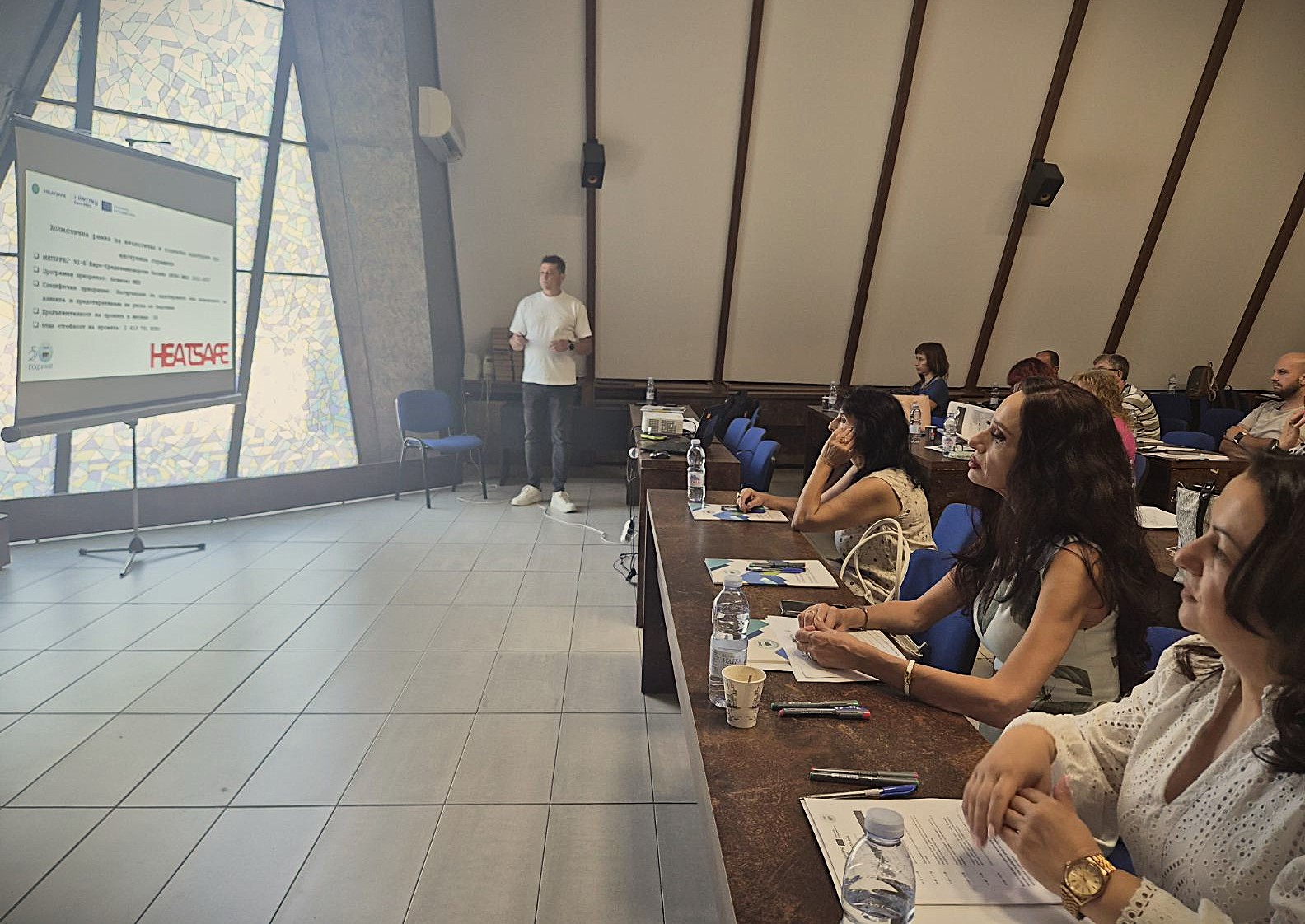
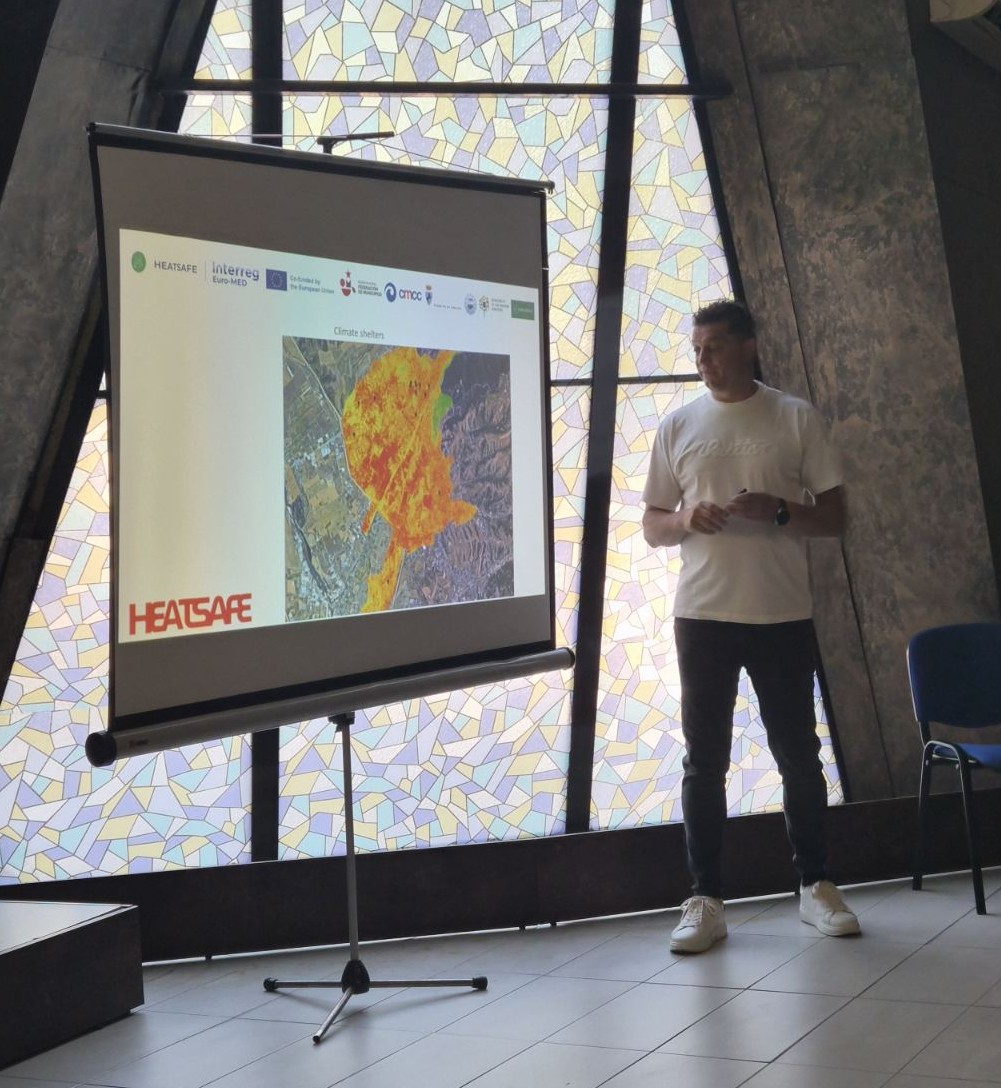
As a practical demonstration, ASWM presented real-time temperature data collected from sensors installed on the roof of the Municipality of Blagoevgrad building. The live monitoring illustrated the impact of urban heat and reinforced the need for evidence-based adaptation measures.
The project's associated partners – the Municipality of Blagoevgrad and the Regional Administration of Blagoevgrad – reaffirmed their commitment to supporting the development of the Local Action Plan. Representatives of the Regional Administration also presented the national BG-ALERT early warning system, whose functionality will be considered in developing local protocols for responding to extreme heat.
Particular attention was given to the analysis of information submitted in advance by members of the Stakeholder Network, including the Regional Inspectorate of Environment and Water, the Regional Health Inspectorate, and the Centre for Emergency Medical Care in Blagoevgrad. Based on these contributions, participants reviewed the proposed measures, identified opportunities for further improvement, and provided recommendations that will be incorporated into the final version of the Local Action Plan.
The project will continue with two additional Stakeholder Network meetings and a capacity-building training programme for local institutions and organisations. The continued engagement of all stakeholders remains essential for delivering an effective and practical Local Action Plan for Blagoevgrad.